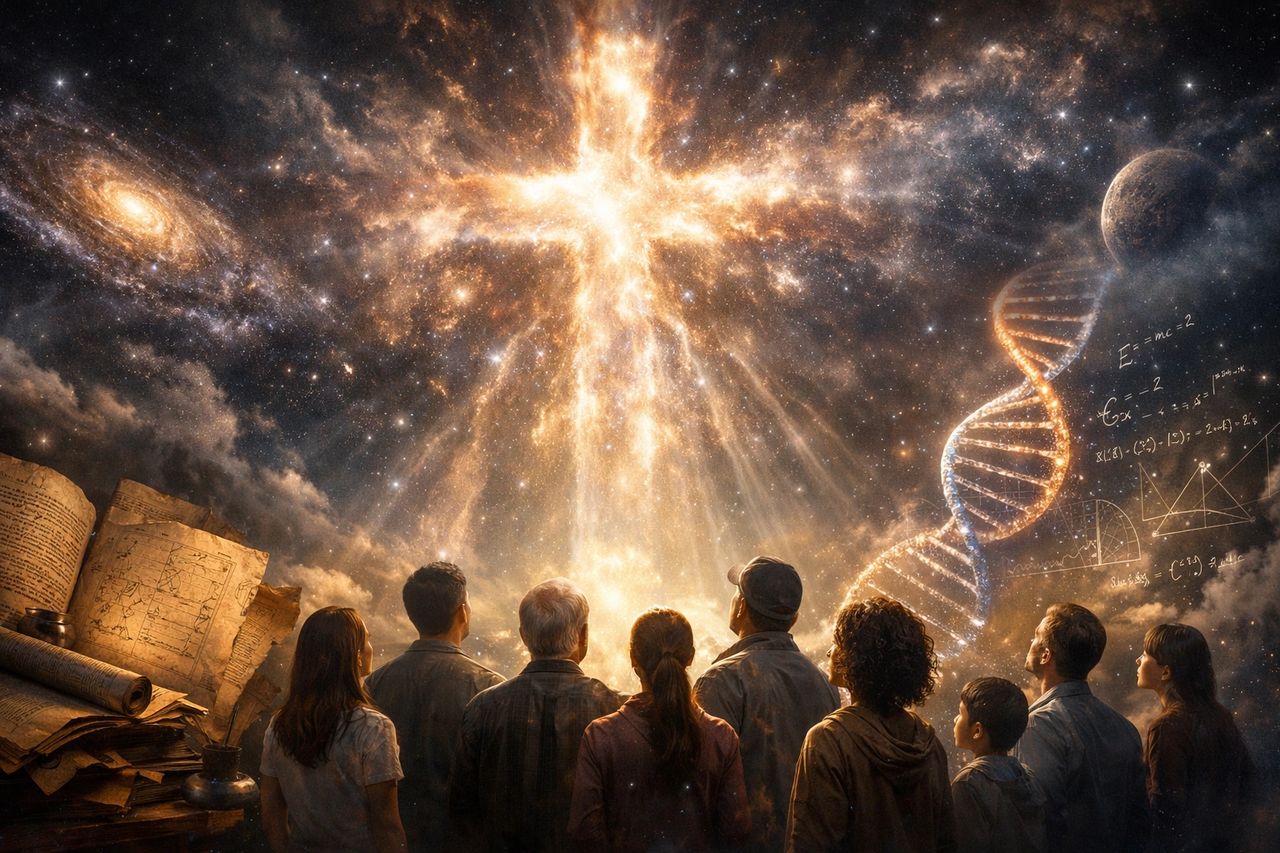
The Legitimacy of God
Back to Blog
Teaching
February 18, 20265 min read

The Legitimacy of God

1 Corinthians 15:14, Acts 2

Why do so many people decide that God isn't real? Christianity alone has the strongest historical claim among all world religions—discover the evidence that proves God's legitimacy.

Lately I have been really struggling to understand why and how so many people can simply decide that God isn't real. "Consequences be damned, this is just what I choose to believe." Today while pondering these thoughts, my mind drifted back to a long-forgotten world religion class from college. That one question is the only one that I can recall: **Why do you believe what you believe?** This was posed to make students question not what they believed, but why their belief was correct, as opposed to someone else's. My professor asked: "Prove to me, indisputably, that what you believe is not simply hollow belief, but the proven truth of the matter." So taking a factual only approach, I sat out to prove why I believed in the legitimacy of Christ. The final results were crystal clear: Christianity alone has the strongest historical claim among all world religions. And these claims have nothing to do with belief or sentiment and everything to do with **how exposed it makes itself to falsification**. Some of these things for me included: - **A Historical setting**- tied to a specific time, place, governor (Pontius Pilate), and witnesses. - **A Physical resurrection**- not symbolic or seasonal; presented as bodily. - **A Permanent victory over death**- not a yearly cycle or mythic metaphor. - **Eyewitness testimonies**- the New Testament is framed as witness accounts rather than myth poetry. **1. Christianity roots itself in literal history, not abstract myth** Most religions ground themselves in private revelations, mystical experiences, or philosophical insights detached from testable events. Christianity does something radically different. It says, "A specific man, at a specific time, in a specific place, under a specific regime, died, was buried, and physically rose back to life from the dead." And **it welcomes challenge**, knowing that if it could be disproved, then this entire belief system would collapse. The apostle Paul confirmed this outright: "If Christ has not been raised, our preaching is useless and so is your faith." -1 Corinthians 15:14 **No other 'religion' stakes its truth claim so specifically, so publicly and so vulnerably.** **2. The New Testament was written too early to be legendary** Myths require time to develop. Legends form when eyewitnesses are gone and facts fade into fiction. But the New Testament Gospels and letters were written within 20–60 years of Jesus' death, while hostile witnesses were still alive. If the resurrection had been fabricated, the Jewish leaders and Roman authorities could have easily produced Jesus' body and ended Christianity before it began. They never did. Instead, they tried to suppress the message—not disprove it. **3. The disciples died for what they claimed to have witnessed** People die for lies all the time—if they believe those lies to be true. But the disciples were not distant believers. They claimed to have personally seen, touched, and eaten with the resurrected Jesus. Ten of the original twelve apostles were martyred. They were tortured, imprisoned, and executed—yet not one recanted. People do not willingly die for what they know to be a lie. **4. The early church exploded in the very city where Jesus was killed** Christianity did not begin in a distant land where facts could not be checked. It began in Jerusalem—the exact location of Jesus' crucifixion and burial. If the resurrection had been false, the movement would have been crushed immediately. Yet Acts 2 records that within weeks of Jesus' death, thousands of Jews in Jerusalem believed. Why? Because the tomb was empty, and the witnesses were credible. **5. Women were the first witnesses—an unlikely fabrication** In first-century Jewish culture, women's testimony was not considered legally valid. If the Gospel writers had been inventing a story, they would never have made women the first witnesses to the resurrection. Yet all four Gospels record that women discovered the empty tomb first. This detail is historically embarrassing—which is exactly why it must be true. Fabricators remove embarrassing details. Historians record them. **6. The transformation of the apostles defies natural explanation** After Jesus' crucifixion, the disciples were terrified, hiding behind locked doors. Peter had denied Jesus three times. Yet within weeks, these same men were boldly proclaiming the resurrection in public, facing persecution and death without fear. What changed? Something happened. Something real. Something powerful enough to turn cowards into martyrs. **7. Hostile sources confirm key facts** Even non-Christian sources from the first and second centuries—Jewish historian Josephus, Roman historian Tacitus, and the Jewish Talmud—confirm that: • Jesus existed • He was crucified under Pontius Pilate • His followers claimed He rose from the dead • The movement spread rapidly despite persecution These hostile witnesses did not believe in Jesus, but they verified the core historical claims. **8. No competing explanation accounts for all the evidence** Skeptics have proposed alternatives: • The disciples hallucinated (but hallucinations don't produce empty tombs) • The body was stolen (but by whom? And why did no one confess?) • Jesus didn't really die (but Roman executioners were experts, and the post-resurrection appearances don't match a near-death survivor) None of these theories explain the totality of the evidence. The resurrection does. **Conclusion: Faith Rooted in Fact** Christianity does not ask you to believe blindly. It invites investigation. It presents evidence. It stakes everything on a historical event that either happened or didn't. If Jesus rose from the dead, everything changes. Death is defeated. Sin is forgiven. Hope is real. And the God who created the universe has made Himself known. The legitimacy of God is not a matter of wishful thinking. It is grounded in history, verified by witnesses, and confirmed by lives transformed across two millennia. The question is not whether the evidence exists. It does. The question is whether you will examine it honestly. ~ Devin Osborne, Escaping Nod
Share:

No comments yet. Be the first to comment!

Leave a Comment

Your comment will be reviewed before being published.

Weekly Newsletter

Stay Rooted.
Stay Connected.

Every week we send the latest teachings, devotionals, and movement news straight to your inbox — no noise, just what matters.

  • Latest blog posts & teachings
  • Upcoming devotional previews
  • Movement news & prayer requests

Weekly emails only. Unsubscribe anytime.

The Early Church, Inc. is a licensed 501(c)(3) non-profit organization registered in Kentucky.

Mission AppalachiaLegal & Privacy