The Lessor-Known Story Behind Who Didn't Enter the Promised Land
When people think of stories told of the wilderness generation in the Bible, one name almost always seems synonymous: Moses. Most Christian's even know how the headline reads- "Moses, Israel's great liberator, not allowed to enter Promised Land." It's a stern warning being broadcast about obedience. But here's the lesser-known truth: Moses was not the only one barred from the promise. In fact, Scripture reveals that an entire group, including his own brother Aaron and nearly a whole generation of Israelites, never stepped foot in the land flowing with milk and honey. Forty years of wandering had taken it's toll on many, but the reason wasn't quite as simple as this, God simply said no. The story is deeper, heavier, and more revealing than most people realize.
The Leader Who Saw It but Never Experienced It
Moses' exclusion is recorded in Numbers 20 and Deuteronomy 32. God instructed Moses to speak to a rock so water would flow for the people. Instead, frustrated and angry with Israel's constant complaining, Moses chose his own technique, and struck the rock with his staff. Water still came out, but obedience matters more than results. God still provided, but was intolerant of the blatant disregard of his order. God told Moses: "Because you did not trust in me enough to honor me as holy… you will not bring this community into the land." -Numbers 20:12.
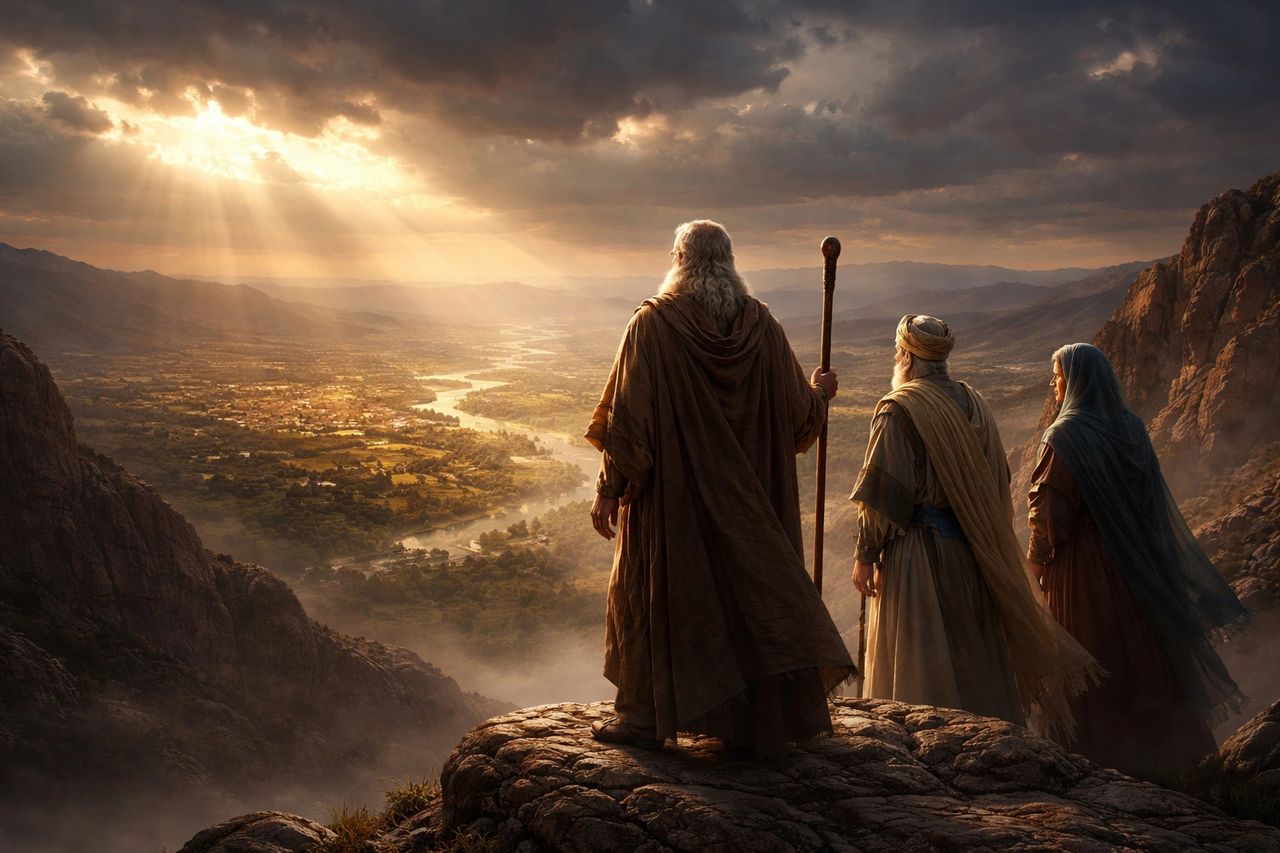
After all that Moses had done, all he had given, the heart ache, the anguish, the frustration, the trials in Egypt, the challenges with the Israelite nation... one bitter moment, one act of frustration, one time of known disobedience was all that it took. Moses would later stand on Mount Nebo, see the Promised Land with his own eyes, and die before entering it (Deuteronomy 34). The man who helped set God's people free and carried them through the wilderness all of those years was only allowed to view the promise from a distance.
The Forgotten Name on the List
Most people remember Moses' consequence but overlook another's. Another very important figure to this story, actually. Scripture is clear, **Moses' brother Aaron was also directly forbidden by God from entering the new, promised land**. God said to Moses: "Aaron will be gathered to his people. He will not enter the land I give the Israelites, because both of you rebelled against my command…" -Numbers 20:24.
And, as God had indicated, Aaron died on Mount Hor before Israel crossed the Jordan. Like Moses, his exclusion was tied to the same incident at Meribah. Leadership carried accountability. Privilege carried responsibility. Today, the same truths apply with similar consequence.
The Generation That Missed It
Here is the part some readers may never fully grasp too, it wasn't just two leaders who were turned away. It was almost an entire nation. After the twelve spies returned from scouting Canaan (Numbers 13–14), ten spread fear and disbelief. The people panicked, rebelled, and said they wished they had died in Egypt. God's response was decisive: "Not one of you who saw my glory… but disobeyed me… will ever see the land." -Numbers 14:22–23.
As a result, every adult from that generation- except Joshua and Caleb- died in the wilderness. For forty years they wandered, not because God was lost, but because they lacked faith. They were delivered from Egypt…but they never entered promise.
Miriam's Quiet Ending
Miriam, Moses' sister and a true prophetess in Israel, also died before entry (Numbers 20:1). The Bible records that Miriam had been punished by God earlier in this journey, however Scripture does not explicitly say she was barred as punishment, like it did with Moses and Aaron. It simply records that she too did not cross into Canaan. Sadly, the entire leadership trio of the Exodus- Moses, Aaron, and Miriam- all passed away before the fulfillment of God's promise. When viewed at a little higher level, this story reveals something deeper than surface level: - Deliverance does not guarantee inheritance. - Calling does not replace obedience. - Witnessing miracles does not equal trusting God.
In The End
The Exodus generation saw plagues, parted seas, manna from heaven, and water from a rock. Yet Scripture says their hearts remained hardened, something I have always struggled to understand. The issue was never God's ability to deliver them, it was their wishy-washy faith in the One who provided for them, and their unwillingness to believe that He would do as He said He would. Today, when we review this story in time, I think it's important that we realize that this isn't just something in history. It's a warning preserved for future generations. The tragedy of the wilderness generation is not that they suffered hardship. It's that they stood on the edge of promise… and yet they missed it.
~Devin
Devin Osborne


