

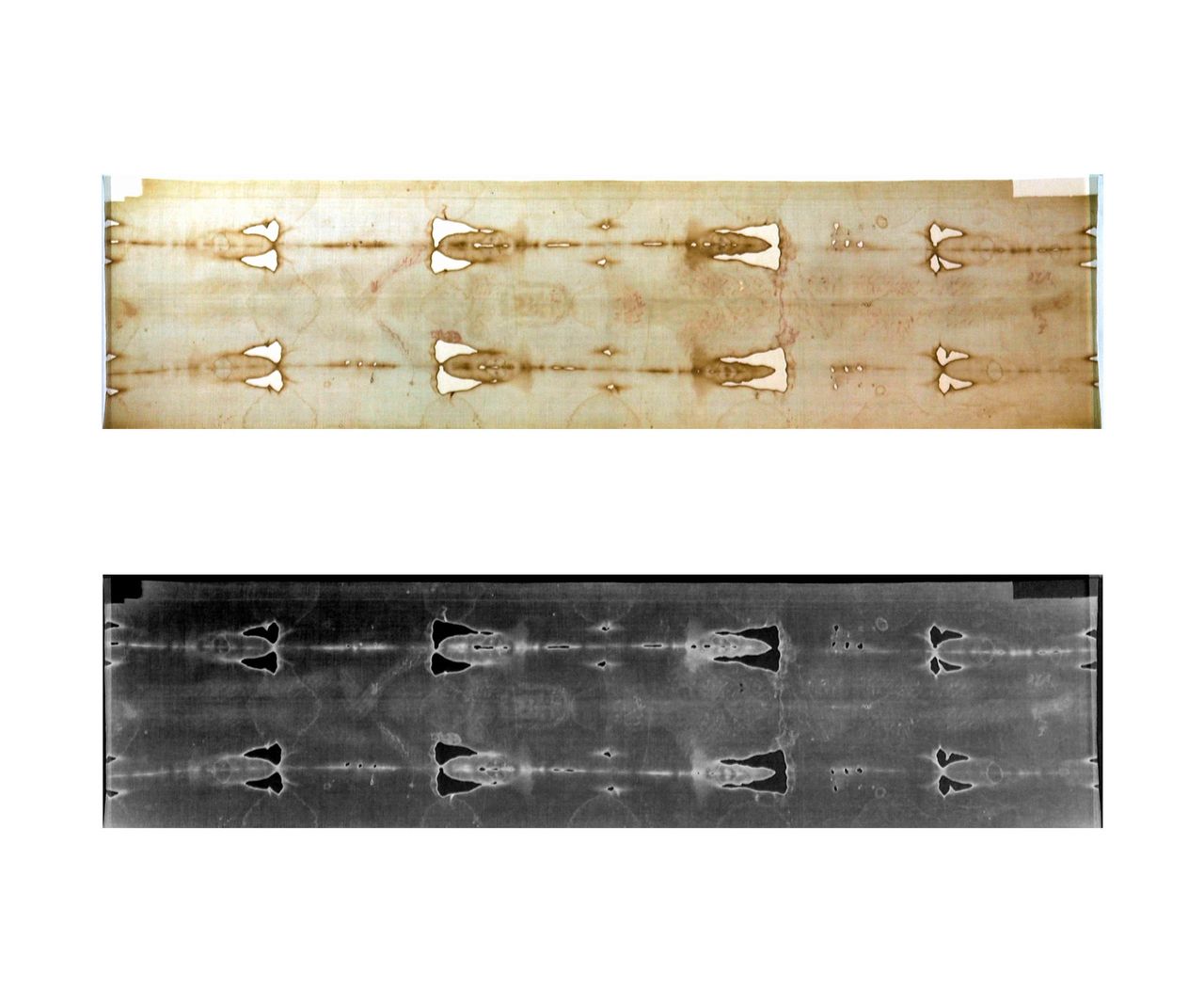
The Shroud of Turin is a long linen cloth kept in Turin, Italy, that bears the faint front-and-back image of a crucified man. Many Christians believe it is the burial shroud of Jesus of Nazareth, while skeptics argue it’s a medieval artifact. What makes it so compelling is that no single explanation fully accounts for all of its features.
Here’s why it’s taken seriously by many scholars and scientists and why the debate refuses to die.
What the Shroud Is:
Material: Linen cloth, about 14 ft long × 3.5 ft wide
Image: A faint, anatomically precise image of a man who shows:
- Scourge wounds consistent with Roman flagellation
- Puncture wounds around the head (not a crown ring, but a cap of thorns)
- Nail wounds in the wrists (not palms—medically correct for crucifixion)
- A spear wound in the side
Unique trait: The image looks like a photographic negative, revealing far more detail when inverted
Why Many Believe It’s Legitimate.
The Image Is Not Paint, Ink, or Dye. Microscopic and chemical analysis shows:
- No pigments, binders, or brush strokes
- The image exists only on the topmost fibers of the linen
- No known medieval technique can reproduce this effect
This alone eliminated most forgery theories.
It Contains 3D Information. When analyzed with image-processing technology:
- The shading corresponds to distance from a body, producing accurate 3D relief
- Paintings, photos, or rubbings do not do this
This suggests a physical process tied to a real human form, not an artist’s hand.
Blood Evidence Matches Real Trauma
- Real human blood (type AB) is present
- Blood appears before the image formed (the image does not cover blood stains)
- Serum separation halos are visible, something artists didn’t understand centuries ago
The wounds match Roman execution methods described in the Gospels with unsettling precision.
The Anatomy Is Shockingly Accurate. Details that medieval artists routinely got wrong are correct here:
- Nails through the wrists (necessary to support body weight)
- Realistic facial swelling and nasal trauma
- Flow patterns of blood consistent with gravity changes during crucifixion
This argues strongly against a medieval origin.
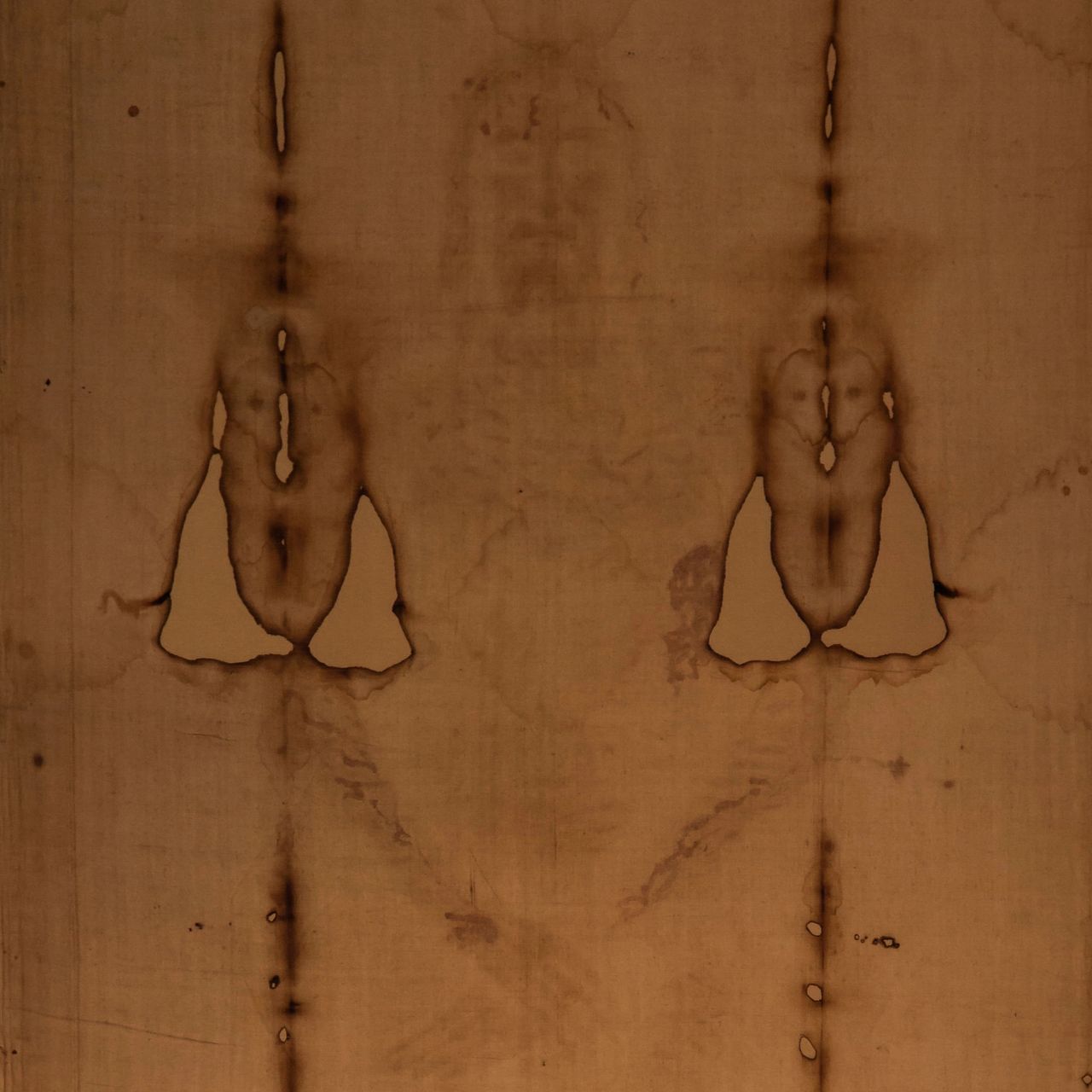
No Known Method Can Recreate It. Modern attempts have been made repetitively, using:
- Paint
- Heat
- Acid
- Photography
- Lasers
…and can imitate parts of the image, but never all of it at once. These characteristics include-
- superficial fiber discoloration
- 3D encoding
- correct blood chemistry
- negative image behavior
To date, no experiment has fully replicated the Shroud.
The Carbon Dating Objection (and Why It’s Not Settled).
A 1988 radiocarbon test dated a small corner of the cloth to the Middle Ages.
Problems with that test:
- The sample came from a repaired edge, not the main body
- The Shroud was damaged by fire, water, smoke, and handling—all of which can skew results
- Subsequent textile analysis suggests the tested corner may not represent the original cloth
Even some involved scientists later acknowledged the sampling was flawed.
Why It Still Matters
If authentic, the Shroud would be:
- The only burial cloth in history bearing a full-body image
- A record of crucifixion consistent with the Gospel accounts
- An image formed by an unknown physical process, possibly involving a burst of energy (measuring approximately 3300-4300 kW).
This last point is why some researchers cautiously speculate that the image formation could align with something extraordinary occurring at death.
The Bottom Line:
The Shroud is not proven beyond doubt to be Jesus’ burial shroud, but by the same token, it is also has not been debunked, despite decades of scrutiny.
This remains one of the most studied, mysterious artifacts in human history.
Belief isn’t required, but dismissal isn’t intellectually honest either.
For more great info, check out the interview below. Tucker Carlson chats with once skeptic- turned believer, Dr. Jeremiah Johnston. This is probably one of the most informative pieces that I have seen on this topic.
https://youtu.be/rKMQY49py4w?si=ekSr7WDatxRE-m8J (This is excellent information)
Thoughts?
~ Devin
Devin Osborne


